A logic-driven admin builder that transforms complex forms into smart, guided intake experiences.
DETAILS
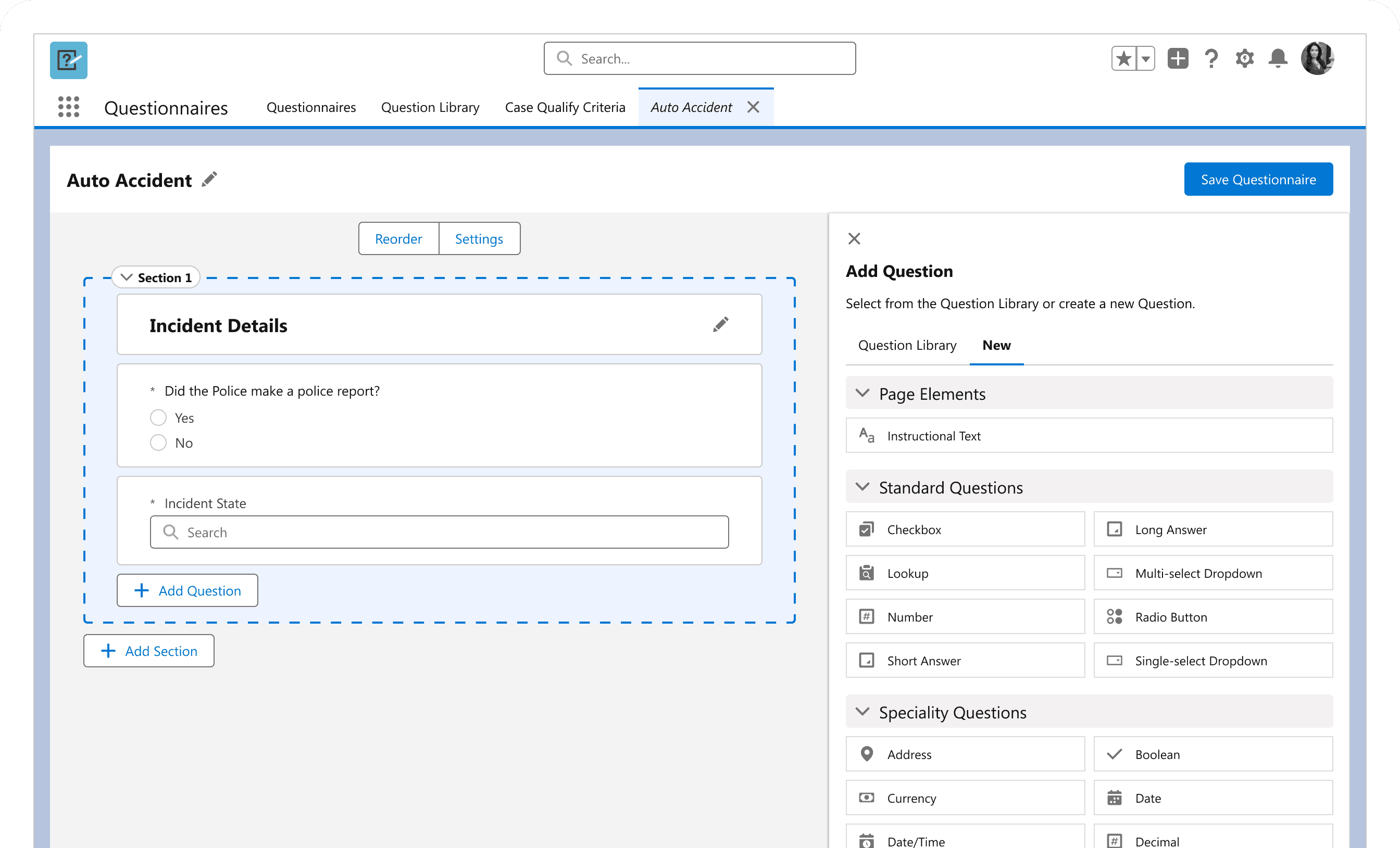
Questionnaires are the fundamental entry point for Litify, serving as the critical engine that law firms use to capture sensitive data and qualify new leads. While the tool is essential for reducing manual entry and ensuring data accuracy, the legacy infrastructure had become a barrier to growth.
My goal as Lead Designer was to re-architect this experience from the ground up, transforming a rigid, linear form-builder into a high-performance, logic-driven ecosystem that empowers admins to build sophisticated intake workflows at scale.
ROLE
Lead User Experience Designer | Litify | 2022
Stakeholder Alignment, End to End Design, Prototyping, User Research and Testing
The Challenge
Our legacy Questionnaire Builder had become a major bottleneck for our users. It was slow, rigid, and lacked the flexibility required for modern legal intake, but there was a significant catch: this tool is the heartbeat of our clients' firms. Because they rely on these questionnaires to process every new lead, we had to perform 'open-heart surgery', totally re-architecting the experience to be faster and more dynamic, all while ensuring zero downtime or disruption to their existing data. The goal wasn't just a facelift; it was to build a scalable logic engine that could handle complex legal workflows without sacrificing the stability our clients depend on.
User Research
To really get understand why the legacy builder was failing, I conducted deep-dive sessions with over 20 power-users. I wanted to move past surface-level complaints and actually map out their cognitive load during a build.
My research focused on two critical areas:
Workflow Fragmenting: I sat with admins to watch them build questionnaires from scratch. It became immediately clear that the 'tab-switching' required to manage questions was breaking their mental model and leading to frequent errors.
Logic Constraints: I interviewed them about the 'workarounds' they had created to bypass our system’s lack of conditional logic. These interviews revealed that admins weren't just frustrated with the speed, they were frustrated that they couldn't build the sophisticated, branching paths their intake teams actually needed.
Strategic Insights
Going into this, the initial assumption was that we just needed a cleaner UI. But after digging into how admins actually worked, I realized the problem was much deeper: the system was too rigid to handle the reality of high-volume legal intake. Admins were forced to leave their workflow just to add a single question, and the lack of conditional logic meant they were building dozens of slightly different forms instead of one smart one. I realized we weren't just building a form-filler; we were architecting a logic-driven engine. We needed to shift from a 'static list' mentality to a 'dynamic builder' that could handle complex branching without the user needing to touch a single line of code. To ensure we didn't over-engineer the MVP, I used a MoSCoW framework to keep stakeholders aligned on what was 'Must-Have' for the launch, prioritizing core stability and logic over secondary aesthetic features.
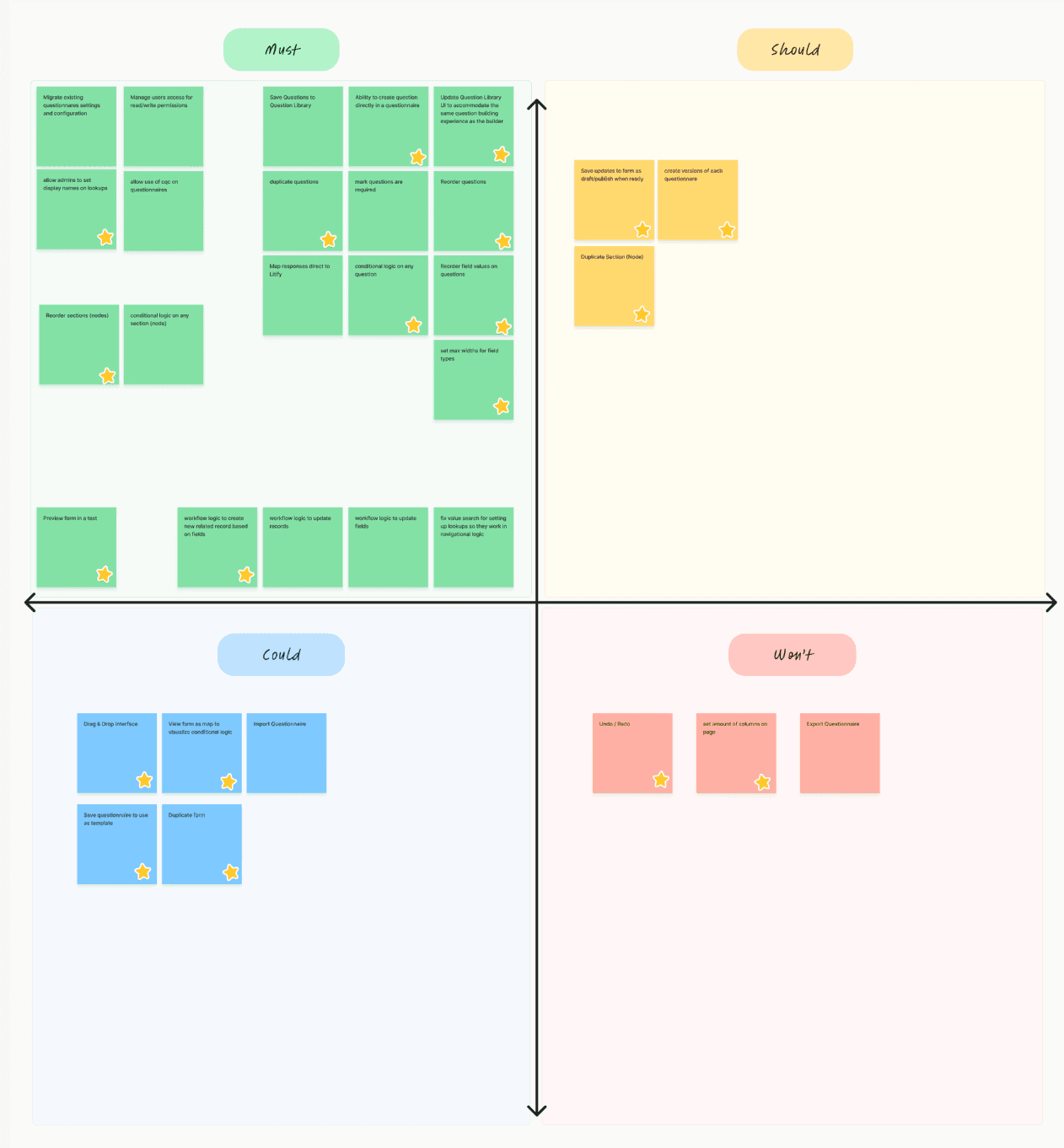
I used a MoSCoW framework to prioritize features and visually communicate priorities with our stakeholders.
The Solution
Instead of a minor facelift, I led a total redesign of the admin experience, focusing on contextual editing and scalable logic. By focusing on the underlying logic rather than just the layout, we turned a frustrating, manual task into a powerful, automated asset that scales with the firm's growth
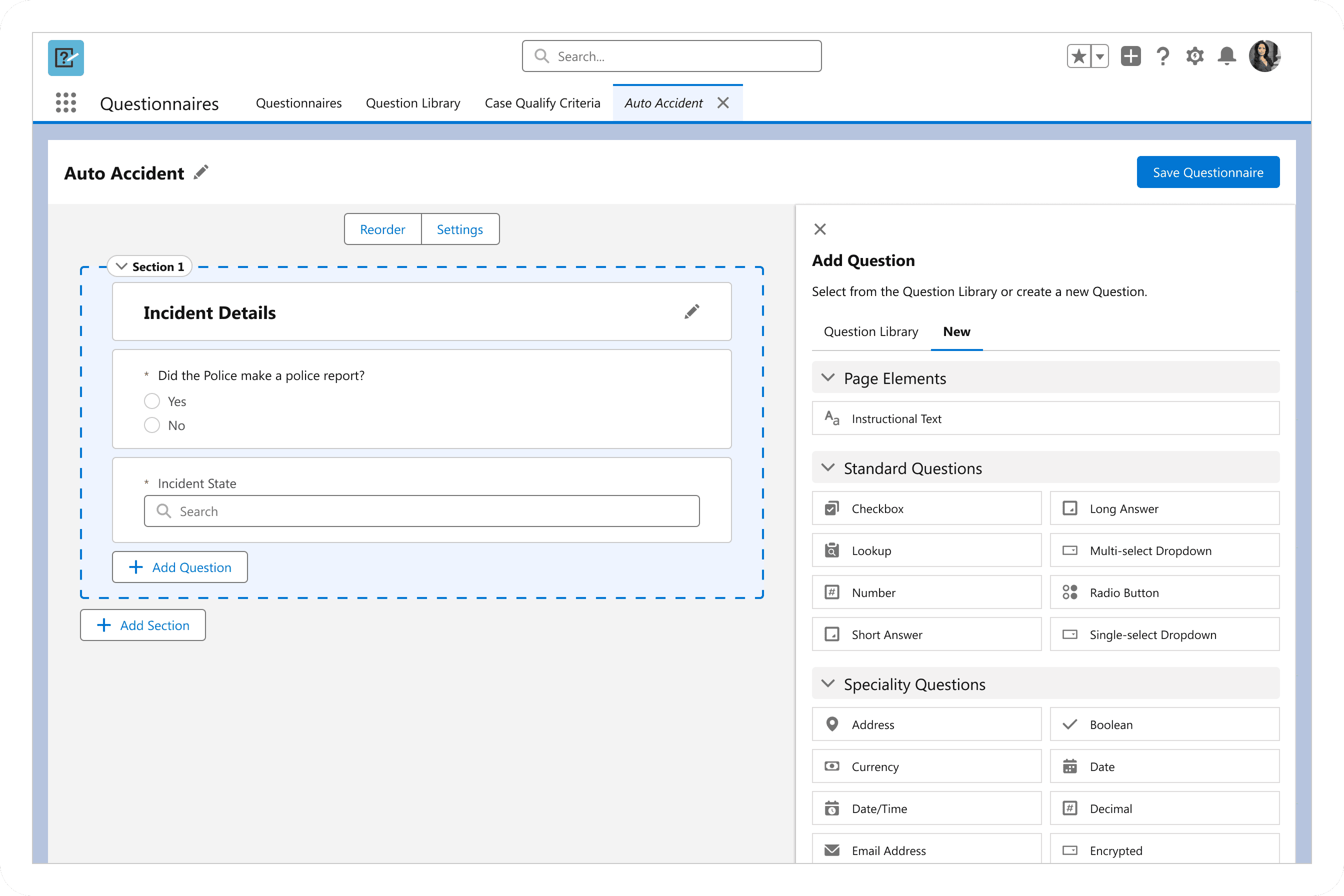
Inline Question Management
I designed a 'Library-first' interface that allows admins to create, edit, or pull in existing questions without ever breaking their flow. This eliminated the constant 'tab-switching' that was the number one source of user frustration .
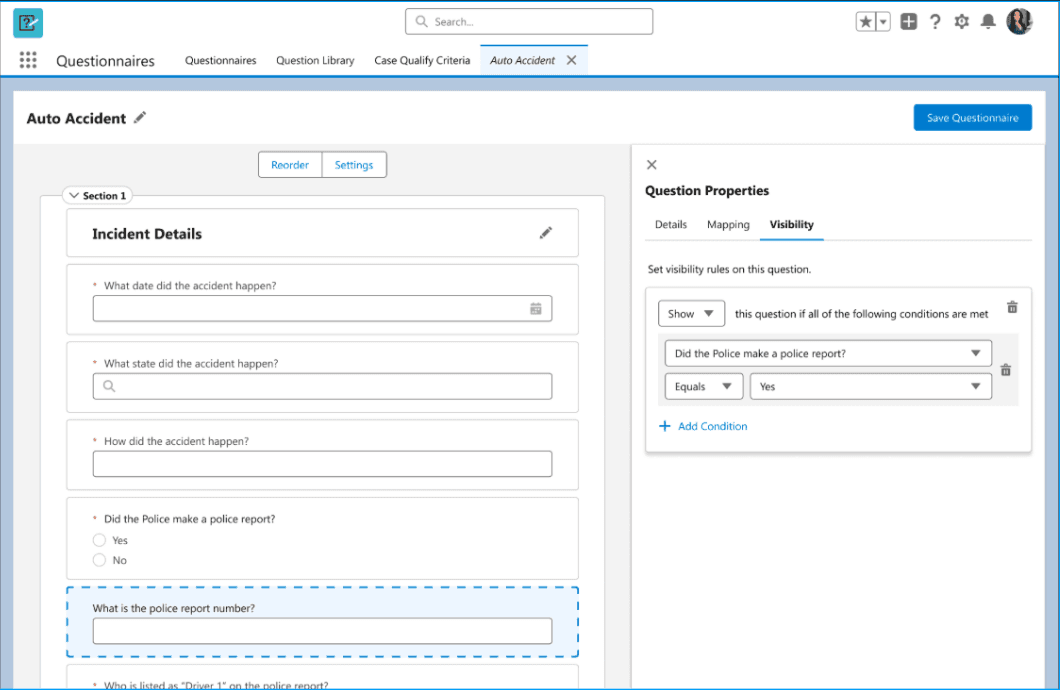
Question-Level Logic
I introduced a conditional logic framework that allows questions to show or hide based on previous answers. This transformed long, intimidating forms into smart, guided conversations that only show what’s relevant .
The Outcome
The new builder transformed a high-friction administrative task into a streamlined, scalable process. By delivering a stable logic engine that required zero downtime, we enabled firms to build more sophisticated intake workflows while reducing the time spent on form management. More importantly, we proved that we could modernize the product's 'heartbeat' without missing a single beat for our clients.